
As consumer preferences shift and technology advances, marketing agencies are under constant pressure to evolve. At the same time, agencies can differ significantly in their services, with some specializing in ad creation while others focus on SEO, analytics, or digital strategy. Because of these differences, a professional business valuation is essential to accurately represent your agency’s unique value. A business valuation for selling a marketing agency offers insight into the agency’s fair market value, as well as its strengths, weaknesses, risks, and opportunities. Both sellers and buyers can rely on this resource to support negotiations and plan with confidence.
Peak Business Valuation frequently values marketing agencies nationwide. To learn more about how to value a marketing agency, contact Peak! Begin today by scheduling a free consultation.
The Purpose of a Business Valuation for Selling a Marketing Agency
A marketing agency valuation estimates how much an agency is worth based on its financial performance, assets, and market conditions. It provides an objective view of the business’s fair market value. For individuals selling a marketing agency, this value can help to determine a realistic asking price. It also builds trust with buyers by showing a clear, data-backed value during negotiations.
In this article, we discuss various tools and techniques business appraisers use when valuing a marketing agency. Business owners can rely on this guide to know how they can prepare for a sale. Schedule a free consultation with Peak to learn more!
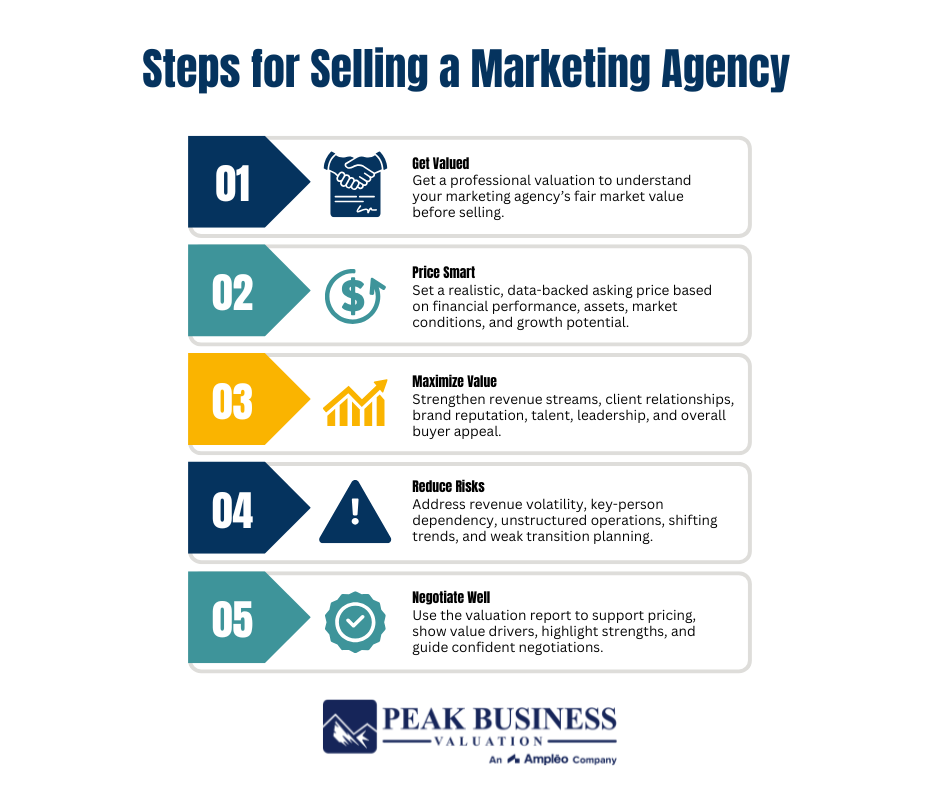
Understanding the Fair Market Value of a Marketing Agency
Understanding fair market value is an important part when learning how to value a marketing agency for sale. To determine fair market value, business appraisers rely on proven business valuation approaches. These techniques analyze different aspects of an agency to estimate its worth. Common business valuation approaches for valuing a marketing agency include:
- Market Approach: The market approach compares a marketing agency to similar companies that have recently sold. It reflects current market demand and pricing trends to estimate the agency’s fair market value.
- Income Approach: When using the income approach, valuation experts project an agency’s expected future earnings, and then discount them to a present value. The present value is then used to estimate the company’s fair market value. This approach is useful when judging a marketing agency’s ability to generate profit.
- Asset Approach: The asset approach values a marketing agency by totaling its assets minus liabilities. It is useful when assets are key for operations or when earnings are irregular.
At Peak Business Valuation, appraisers combine these approaches to arrive at a comprehensive fair market value estimate. Knowing your agency’s fair market value helps set an asking price, support negotiations, and set realistic expectations.
Maximizing the Value of a Marketing Agency
In a business valuation for selling a marketing agency, business appraisers assess various factors and their impact on the agency’s performance. Factors that increase an agency’s appeal or success are known as value drivers. As business owners focus on these areas, they may be able to maximize the asking price of their agency. Below are some common value drivers of a marketing agency:
- Diverse Revenue Streams: Diverse revenue streams reduce reliance on one single service or client. Offering a mix of project-based work, retainers, and digital services helps regulate cash flow and attracts buyers looking for predictable income.
- Client Relationships: Marketing agencies often rely heavily on their client relationships. Prioritizing customer service, long-term contracts, and client outreach can improve this area and promote consistent demand.
- Brand Reputation: Positive industry recognition and client testimonials add credibility. A well-known, respected brand can list at a competitive asking price.
- Talent: Skilled creative and strategic teams enhance service quality and client satisfaction. In addition, an established leadership team attracts buyers as it can simplify a transition.
Developing these areas of your marketing agency can help you appeal to more buyers and negotiate from a position of strength. Schedule a free consultation with Peak Business Valuation to learn which value drivers your agency possesses.
Identifying Risks When Selling a Marketing Agency
When valuing a marketing agency, business appraisers may come across potential risks of the agency as well. If you are preparing to sell your marketing agency, learning about the risk factors of your business through a business valuation report enables you to strengthen these areas before a sale. Possible risks associated with a marketing agency include:
- Revenue Volatility: Agency revenue can fluctuate due to changing client budgets, seasonal campaigns, or economic conditions. This inconsistency may make it harder for buyers to forecast future earnings and assess risk.
- Key Person Dependency: Many small agencies rely on founders, senior strategists, or creative leads to maintain client relationships and deliver results. Establishing a strong team and transition plan can help reduce this risk.
- Unstructured Operations: Marketing agencies without documented systems for client onboarding, campaign management, or reporting may appear disorganized or difficult to scale. Buyers typically prefer businesses with repeatable, efficient processes that can transfer easily.
- Shifting Trends: The marketing industry evolves quickly, with frequent shifts in platforms, algorithms, and consumer behavior. Agencies that fail to adapt to these changes may struggle to maintain performance and client satisfaction.
Addressing these risks before going to market not only strengthens your agency’s value but also builds trust with potential buyers. Moreover, these insights help illuminate an agency’s unique market position.
Determining a Realistic Asking Price for a Marketing Agency
When selling a marketing agency, business owners need to set a fair asking price. Obtaining a professional valuation helps establish a realistic figure that appeals to buyers. This objective assessment promotes transparency between buyer and seller, allowing both parties to negotiate with clear expectations. A business valuation for selling a marketing agency provides clarity to ensure the asking price is realistic, supporting a smoother and more successful sale process.
Utilizing a Valuation Report When Selling a Marketing Agency
After assessing a marketing agency’s performance, valuation experts compile a business valuation report. This report explains financial analyses, key value drivers, market comparisons, and the valuation methods used to determine the fair market value. Business owners can use this information to set a realistic asking price, support negotiations, and highlight the agency’s strengths to potential buyers. Throughout the selling process, the valuation report serves as a valuable tool for building credibility and guiding strategic decisions.
Conclusion
A business valuation for selling a marketing agency is an essential resource for business owners. It determines the agency’s fair market value, which can be used to set an asking price and support negotiations. A business valuation also outlines unique value drivers and risks of the business. Strengthening these areas can improve the agency’s appeal and help sellers to maximize their marketing agency’s value.
Peak Business Valuation is a trusted business appraiser. We frequently value marketing agencies throughout the United States. If you have any questions about selling your agency, contact Peak Business Valuation! We are happy to support you as you prepare for this transition. Schedule a free consultation with Peak today to get started valuing a marketing agency!