
The wealth management industry continues to grow as individuals and families seek professional guidance to manage investments, retirement plans, and financial goals. As a result, acquiring a wealth management firm can be an attractive opportunity. However, before making a purchase, it is important to receive a valuation for buying a wealth management firm to understand what the business is worth.
Many buyers pursue wealth management firms because of their stable fee-based income and loyal client base. That said, not all firms are equal. Factors like client retention, advisor experience, and regulatory compliance can greatly impact value.
Peak Business Valuation, professional business appraiser, values wealth management firms throughout the United States. We are happy to provide you with a wealth management business valuation. In addition, we can discuss any questions you may have on buying or valuing a wealth management firm. Start today by scheduling your free consultation below.
What is a Business Valuation for a Wealth Management Firm?
A business valuation is the process of determining the economic value of a company. When conducting a valuation for buying a wealth management firm, valuation experts analyze several things. Common considerations include financial statements, revenue streams, client demographics, and operational performance. This provides a clear picture of the firm’s financial health and market position.
For buyers, a valuation is a critical step in buying a business. It ensures you understand what you are acquiring and whether the asking price reflects the firm’s true value. A professional wealth management business appraisal can also uncover strengths and weaknesses that may impact future performance.
In this article, we highlight the importance of a business valuation for buying a wealth management firm. If you have any questions, schedule a free consultation with Peak Business Valuation today!
Wealth Management Firm Valuation Approaches
Below are the most common approaches used when conducting a valuation for buying a wealth management firm. Each approach provides a unique perspective on value:
- Market Approach: The market approach compares the firm to similar wealth management businesses that have recently sold. This method uses industry data and valuation multiples, such as price-to-revenue or price-to-SDE ratios, to estimate value.
- Income Approach: Next, the income approach evaluates the firm’s earning potential and expected future cash flow. This valuation technique is especially important for wealth management firms due to their recurring revenue structure.
- Asset Approach: Lastly, the asset approach focuses on the firm’s tangible and intangible assets. While less common for service-based firms, it can still provide insight into the value of equipment, technology, and other resources.
Each of these approaches plays an important role in determining the value of a wealth management firm. By using various approaches, a valuation provides a well-rounded and reliable estimate of what the business is worth.
Negotiating a Fair Purchase Price for a Wealth Management Firm
Furthermore, when buying a wealth management firm, negotiating the purchase price is a key step. Buyers and sellers often have different expectations, making it important to rely on objective data.
With this information, you can ensure the purchase price reflects the firm’s true worth. This reduces the risk of overpaying and strengthens your ability to negotiate. To learn more, see Negotiating a Purchase Price of a Business.
Building a Strong Wealth Management Business Plan
Obtaining a valuation for buying a wealth management firm can also help you develop a strong business plan. As part of a wealth management business appraisal, valuation experts assess the firm’s financial condition, strengths, and weaknesses. This information serves as a foundation for future planning.
With these insights, you can identify areas for growth and create strategies to improve performance. For example, you may focus on expanding client services, improving operational efficiency, or increasing assets under management. In addition, a valuation can support long-term decision-making and strategic planning. See Using a Business Valuation for a Business Plan to learn more.
Understanding Opportunities of a Wealth Management Firm
When valuing a wealth management firm, business appraisers assess key value drivers. This helps buyers understand the opportunities associated with the business and where they can create more value.
Common value drivers for a wealth management firm include:
- Strong client retention and long-term relationships
- High assets under management (AUM)
- Diversified revenue streams
- Experienced and licensed advisors
- Efficient operations and scalable systems
Taking advantage of these factors helps buyers identify growth opportunities and maximize returns after the acquisition. For more insights, read Value Drivers for a Wealth Management Firm.
As a professional business appraiser, Peak Business Valuation often works with individuals looking to buy a wealth management firm. We can provide you with a wealth management business appraisal and answer any questions you have. Schedule a free consultation below to get started!
Identifying Risks of Buying a Wealth Management Firm
Business appraisers also assess the risks of a wealth management firm. Understanding these risks is essential when completing a valuation for buying a wealth management firm.
Common risks include:
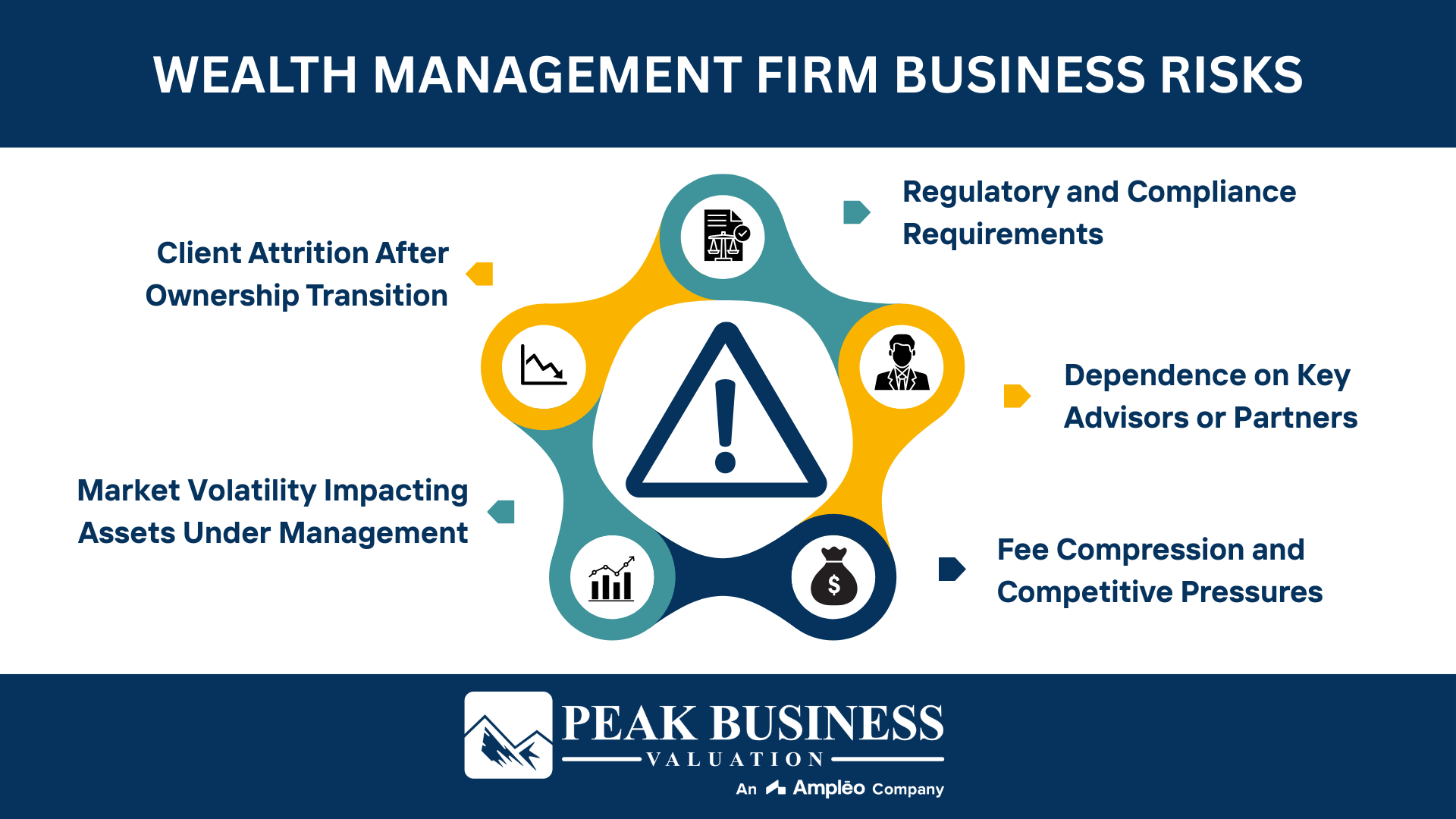
- Client attrition after ownership transition
- Regulatory and compliance requirements
- Dependence on key advisors or partners
- Market volatility impacting assets under management
- Fee compression and competitive pressures
Understanding these risks helps buyers prepare for potential challenges and make informed decisions. It also allows you to develop strategies to mitigate these risks after the acquisition.
Securing Financing for Buying a Wealth Management Firm
Moreover, buying a wealth management firm often requires significant capital. Fortunately, there are financing options available to help buyers complete the acquisition. The Small Business Administration (SBA) offers several loan programs designed for small business owners.
SBA loans provide benefits such as low interest rates, lower down payments, and longer repayment terms. These features make them an attractive option for buyers. Peak Business Valuation works with over 90 SBA lenders and can connect you with an experienced lender for wealth management firm acquisitions.
When applying for an SBA loan for a wealth management firm, lenders may request a business valuation. Peak Business Valuation is happy to provide a wealth management business valuation to help you secure financing. For more information, see SBA Loans or SBA Financing.
Obtaining a Wealth Management Business Valuation Report
At the end of a valuation for buying a wealth management firm, you receive a detailed valuation report. This report outlines the valuation approaches used, financial analysis, and the final value conclusion.
In addition, the valuation report includes insights like cash flow projections, market comparisons, and risk assessments. It may also highlight opportunities for growth and areas for improvement. Buyers can use this report to support negotiations, secure financing, and guide post-acquisition planning.
Conclusion
In conclusion, buying a wealth management firm requires careful analysis and strategic planning. A business valuation is a valuable tool that provides insight into a firm’s financial performance, risks, and opportunities. During a valuation for buying a wealth management firm, you learn about fair market value, key value drivers, and potential risks. This information can help you structure a successful acquisition.
Peak Business Valuation is here to help you obtain a comprehensive business valuation. Schedule your free consultation and take the next step toward purchasing a wealth management firm with confidence.