
Wealth management firms play a vital role in helping clients grow and protect their assets. When it comes time to sell, understanding the true value of your firm is essential. A business valuation for selling a wealth management firm examines factors like recurring revenue, client relationships, assets, and profitability to provide a clear, supportable estimate. With this insight, owners can set realistic expectations, strengthen their negotiating position, and navigate the sale process with confidence.
Peak Business Valuation regularly values wealth management firms throughout the United States. If you are preparing to sell your firm, contact Peak! We are happy to answer your questions about valuing a wealth management firm and guide you through this process. Begin today by scheduling a free consultation with Peak!
The Purpose of a Business Valuation for Selling a Wealth Management Firm
A business valuation for selling a wealth management firm is the process business appraisers follow to calculate a firm’s fair market value. This figure helps sellers set a realistic asking price. Along with fair market value, appraisers also identify strengths and weaknesses associated with the firm. Sellers can then focus their efforts on these areas to increase appeal, and buyers can use these insights to make informed decisions.
In this article, we discuss how business appraisers determine the fair market value of a wealth management firm. Sellers can use this knowledge to their advantage by setting a realistic asking price and negotiating confidently. Reach out to schedule a free consultation with Peak Business Valuation if you have any questions about valuing a wealth management firm!
Understanding the Fair Market Value of a Wealth Management Firm
The fair market value of a business represents the realistic price that a willing buyer and seller would agree on for the business under normal market conditions. As such, many sellers rely on this figure to determine and support their wealth management firm’s asking price. When determining how to value a wealth management firm, business appraisers typically rely on three common valuation approaches. These techniques help provide a baseline estimate, which can then be adjusted through deeper analysis. Below, we discuss each of these valuation approaches:
Market Approach: The market approach compares a wealth management firm to similar firms that have recently sold. Using comparable sales data helps to estimate a fair price based on what buyers have paid for comparable businesses.
Income Approach: This approach assesses a firm’s ability to generate future earnings. Business appraisers first project expected cash flows, and then adjust them to a present value. This technique reflects what the business is worth based on its income potential.
Asset Approach: The asset approach values a wealth management firm based on the total value of its assets minus liabilities. It considers tangible assets like office equipment and intangible assets such as client lists. This approach is helpful when the firm’s earnings are inconsistent or when assets hold significant value.
At Peak Business Valuation, we apply more than one approach to provide a well-rounded analysis. Check out How to Value a Small Business to learn more.
Maximizing the Value of a Wealth Management Firm
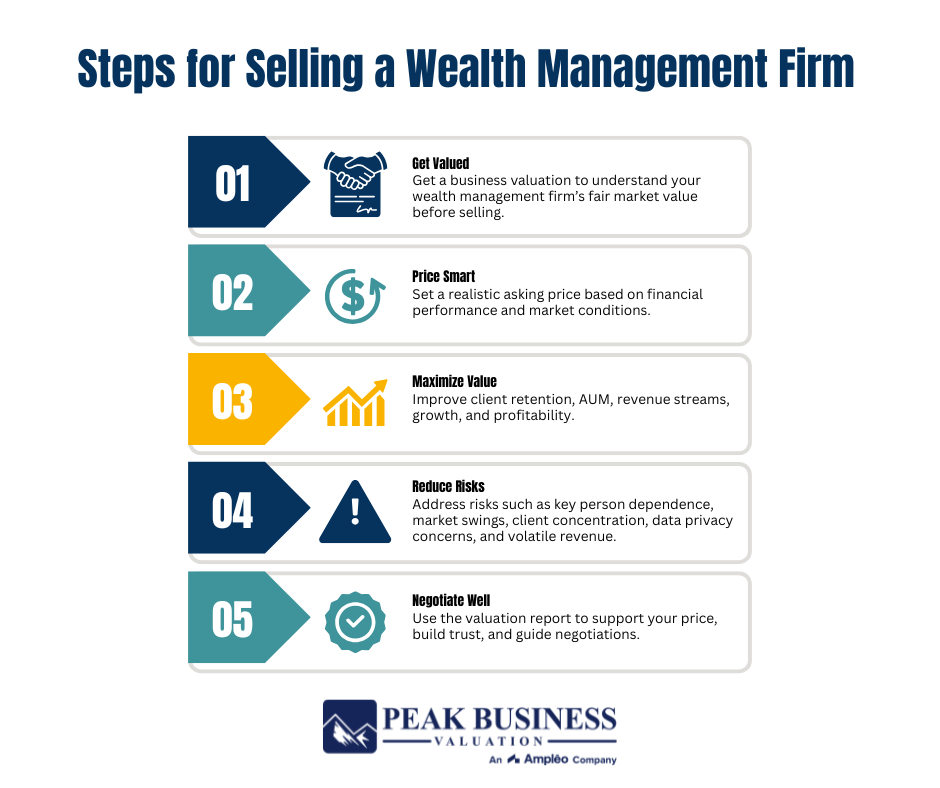
During a business valuation for selling a wealth management firm, business appraisers identify key factors that may increase the selling price of a firm. These factors are also known as value drivers. As business owners work to improve these characteristics, they may be able to sell their firm at a higher price. Some common value drivers for a wealth management firm include:
- Client Retention: High client retention indicates stable, recurring revenue and reduces the risk of financial loss. Firms with loyal clients are more attractive to buyers because they offer predictable cash flow.
- Assets Under Management (AUM): Larger AUM often leads to higher fees and greater revenue potential. It also reflects the firm’s market presence and ability to attract and maintain clients.
- Diverse Revenue Streams: Firms with multiple revenue streams, such as advisory fees, commissions, and financial planning, are less vulnerable to market fluctuations. Diversification enhances financial stability and overall value.
- Growth Rate: A consistent growth rate signals a firm’s ability to expand its client base and increase revenue over time. Buyers value firms with strong growth prospects as they promise future returns.
Cultivating your firm’s value drivers can increase buyer interest and raise the selling price. See Value Drivers for a Wealth Management Firm to dive deeper.
Identifying Risks When Selling a Wealth Management Firm
Just as there are factors that can increase a wealth management firm’s selling price, certain risks can decrease it. Common risks of a wealth management firm include:
- Key Person Dependence: Losing a top advisor or founder can disrupt client relationships and operations. Firms that rely heavily on one or two key individuals may see decreased client confidence and value.
- Market Swings: Fluctuations in markets can impact the value of client portfolios and reduce fee income. Firms sensitive to market swings may face volatile revenues and lower valuations.
- Client Concentration: Relying heavily on a few large clients can threaten revenue stability if one or more leave. Diversified client bases reduce this risk and promote resiliency.
- Data Privacy: Firms are often targets of cyberattacks because they store financial records, personal data, and transaction details. Investing in modern, secure systems is essential to protect client information and maintain trust.
You can learn which risks are affecting your wealth management firm through a professional business valuation! Schedule a free consultation with Peak Business Valuation today to get started on a wealth management firm valuation.
Determine a Realistic Asking Price for a Wealth Management Firm
When selling a wealth management firm, business owners need to set a realistic listing price to attract serious buyers. Obtaining a professional business valuation can help determine a fair asking price based on the firm’s financial performance and market conditions. This valuation promotes transparency by providing both buyers and sellers with an objective benchmark. As such, a well-supported asking price can increase the likelihood of a smooth and successful sale.
Utilizing a Valuation Report When Selling a Wealth Management Firm
A business valuation for selling a wealth management firm involves a thorough assessment of the firm’s financial health, market position, and growth potential. After evaluating these factors, valuation experts compile a detailed business valuation report that outlines the firm’s estimated fair market value. This report typically explains financial analyses, valuation techniques used, and the risks and opportunities of the firm. Business owners can use this comprehensive document to set a realistic asking price, support negotiations, and provide credibility to potential buyers throughout the selling process.
Conclusion
Receiving a business valuation for selling a wealth management firm is essential for setting a fair asking price and achieving a successful sale. With a professional business valuation report, owners can understand key value drivers and potential risks, and navigate transactions with confidence.
As a professional business appraiser, Peak Business Valuation is happy to help in valuing a wealth management firm. If you have any questions about how to value a wealth management firm, contact Peak. Schedule your free consultation today!