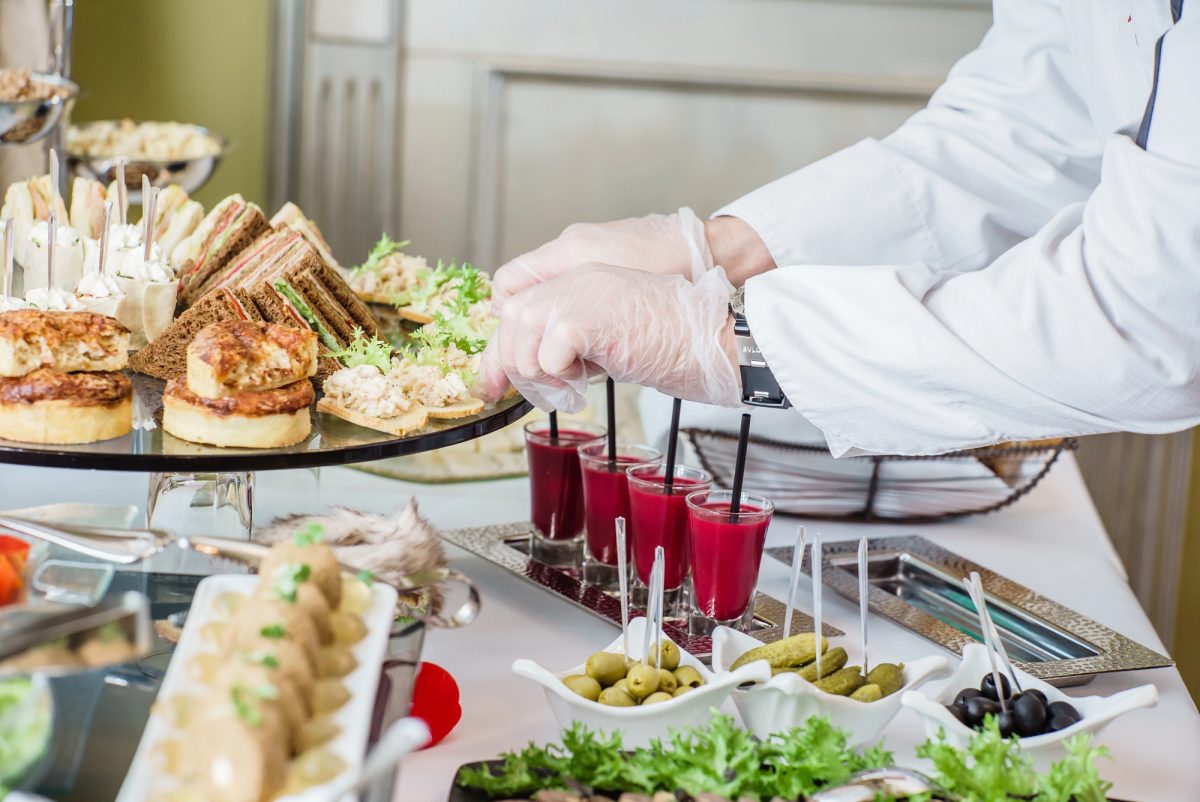
Catering businesses are benefiting from growing demand for workplace gatherings, social celebrations, and convenient off-premises dining. This trend creates opportunities to expand recurring accounts, services, and revenue. Moreover, some owners are considering growth investments, a sale, or an ownership transition. In each case, understanding how to value a catering business can help an owner make informed decisions. To arrive at a reliable valuation, appraisers follow a structured process that relies on common business valuation approaches. Below, we discuss how to use the income and market approaches when valuing a catering business.
As a professional business appraisal firm, Peak Business Valuation works with catering companies nationwide. We can support you with a credible catering business valuation report whether you are preparing for a sale, an acquisition, or a loan. In addition, we can address any questions you have on how to value a catering business. Get started today by scheduling a free consultation below
How to Value a Catering Business
Normalizing the operation’s earnings is the first step when valuing a catering business. An appraiser adjusts reported profit for owner pay and personal expenses charged to the business. One-time costs tied to a single event or contract are removed as well. The result is a normalized earnings figure that shows what the operation can provide a new owner.
From that figure, appraisers often use the market approach and the income approach to arrive at a conclusion of value. The market approach relies on comparable sales and catering valuation multiples, while the income approach focuses on future cash flow and risk. In many cases, appraisers combine both approaches for a balanced conclusion of value. We break down each methodology in the following sections.
Valuing a Catering Business Using the Market Approach
The market approach is ideal for a catering business with a steady revenue history and a track record of profitable events. This technique measures the operation against similar catering companies that have recently sold. Because independent caterers are rarely publicly traded, valuation analysts turn to private transaction databases rather than stock market data to identify these sales.
To apply the market approach, an appraiser first selects suitable valuation multiples for a catering business. These are market-based ratios that apply to the catering business’s earnings or sales to determine a fair market value figure.
Multiples for a Catering Business
At Peak Business Valuation, our analysts often apply SDE, EBITDA, and revenue multiples when valuing a catering business. We explain each metric below:
SDE Multiples for a Catering Business
An owner-operated catering business is typically valued using Seller’s Discretionary Earnings (SDE). SDE captures the full economic return the owner takes home from the company. An appraiser arrives at SDE by starting with net income and restoring the owner’s pay, benefits, and personal expenses to it.
Formula: Value = SDE × Multiple
Range: SDE multiples for a catering business generally range from 1.37x to 2.96x SDE.
EBITDA Multiples for a Catering Business
EBITDA stands for Earnings Before Interest, Taxes, Depreciation, and Amortization. Unlike SDE, it treats the owner’s pay as a true business cost rather than restoring it to earnings. EBITDA multiples are common when valuing catering businesses large enough to have a general manager or event director.
Formula: Value = EBITDA × Multiple
Range: EBITDA multiples for a catering business generally range from 1.91x to 4.30x EBITDA.
Revenue Multiples for a Catering Business
Revenue multiples reflect a catering business’s value based on its trailing 12-month sales. Since this ratio leaves profitability out of the picture, appraisers mainly use it to cross-check the SDE or EBITDA figure.
Formula: Value = Revenue × Multiple
Range: Revenue multiples for a catering business generally range from 0.25x to 0.56x revenue.
Multiples give owners a starting benchmark, but they tend to overlook key factors that impact value. This includes items like the operation’s contract mix, staffing needs, and seasonal swings. If you are seeking a credible catering business valuation, it is best to work with a certified business appraiser. Schedule a free consultation with Peak Business Valuation if you have any questions.
Valuing a Catering Business Using the Income Approach
Another common technique for valuing a catering business is the income approach. This approach is grounded in future performance rather than past sale prices. An analyst forecasts the operation’s cash flow three to five years out. Then, a discount or capitalization rate is applied to reflect the risk involved.
Several risk factors shape these projections:
- Revenue Mix: Revenue concentrated in one segment, such as weddings, is riskier than revenue spread across corporate, social, and off-premises work.
- Customer and Venue Concentration: A handful of repeat clients or preferred-vendor venue agreements leaves a caterer exposed if any single relationship ends.
- Food-Cost Volatility: Prices for proteins, seafood, and produce shift from month to month, affecting how reliable projected margins turn out to be.
- Labor Costs and Staffing Availability: Event staffing depends on a flexible pool of kitchen and service labor, and trouble filling that labor can limit growth and squeeze margins.
- Seasonality: Bookings often cluster around wedding season, the holidays, and the corporate event calendar, producing uneven monthly cash flow.
- Key-Person Dependence: Risk rises when the owner personally handles sales, menu planning, or event execution with no trained team to step in.
- Regulatory Compliance: Health department permits, food safety certifications, and local licensing requirements can affect a caterer’s ability to operate without interruption. Caterers should also understand federal requirements under the Food Safety Modernization Act (FSMA).
These risks determine the discount rate an appraiser selects for the valuation. A riskier stream of projected cash flow calls for a higher rate, and may negatively impact the valuation.
Methods to Value a Catering Business Using the Income Approach
Within the income approach, appraisers generally choose between two methods: the capitalization of cash flow method and the discounted cash flow method.
Capitalization of Cash Flow Method
The capitalization of cash flow method is typically used for catering businesses with stable, predictable earnings and modest growth prospects. An appraiser divides the operation’s most recent normalized cash flow by a capitalization rate. This rate weighs the expected investor return against the operation’s risk level. Here is the formula:
Value = Normalized Cash Flow ÷ Capitalization Rate
A higher capitalization rate signals more risk and lowers the valuation. A lower rate points to a more stable business and a higher value.
Discounted Cash Flow Method
The discounted cash flow (DCF) method is ideal when valuing a business expecting strong growth or an operation whose earnings shift throughout the year. Under the DCF method, an analyst projects cash flow across a three-to-five-year window and discounts each year on its own. A terminal value then captures everything beyond that window. The formula for discounted cash flow is as follows:
Value = Present Value of Projected Cash Flows + Present Value of Terminal Value
DCF depends on assumptions rather than historical results. As such, the valuation depends heavily on accurate projections of future event volume and profit margins.
Summary
Knowing how to value a catering business helps owners and buyers prepare for a sale, an acquisition, or an ownership transition. The process starts with normalized earnings. From there, an appraiser often draws on the market approach and the income approach to arrive at a conclusion of value. When appropriate, using a combination of these approaches provides a credible catering business valuation that accounts for market trends, earning power, and key risk factors.
Peak Business Valuation is a trusted valuation firm that values catering businesses throughout the country. Whether you are preparing for a sale, financing, or any important financial decision, we can support you with a business valuation for a catering business. In addition, we can answer any questions you have about how to value a catering business. Schedule your free consultation with Peak Business Valuation below to get started.