
Travel Agency Valuation Multiples
When preparing to buy, expand, or sell a travel agency, understanding the company’s value is essential. One of the most common methods for determining the value of a travel agency is using valuation multiples. These figures provide a broad fair market value estimate by comparing similar agencies that recently sold on the market. With correct application, travel agency valuation multiples offer helpful insights for early-stage planning.
This article discusses common travel agency valuation multiples, how to apply them, and key factors to take into account. It is important to note that the benchmarks provided here are based on market averages and may not offer precise results. If you need a reliable travel agency valuation, it is best to connect with a certified and experienced business appraiser.
Peak Business Valuation is a trusted business appraisal firm that often helps individuals looking to buy, grow, sell, or secure financing for a travel agency. We are happy to provide you with a business valuation for a travel agency! Additionally, we can address any questions you may have about valuing a travel agency. You can begin today by scheduling a free consultation below.
What Are Travel Agency Valuation Multiples?
Valuation multiples, also known as market multiples, are financial ratios used to estimate a company’s fair market value. When valuing a travel agency, experts calculate these ratios by analyzing recent transactions of comparable companies. After selecting applicable multiples, they are applied to key financial metrics such as earnings or revenue to estimate fair market value. When used correctly, travel agency valuation multiples can offer valuable insights into a company’s market position. Check out Valuation Multiples for a Travel Agency for more guidance.
Common Travel Agency Valuation Multiples
When performing a travel agency valuation, Peak Business Valuation generally relies on multiples derived from Seller’s Discretionary Earnings (SDE), EBITDA, and revenue. Each multiple provides a unique perspective on the agency’s financial performance. To provide the most accurate valuation, business appraisers often use a combination of these multiples.
SDE Multiples for a Travel Agency
Seller’s Discretionary Earnings (SDE) represent the total income available to a single owner-operator of a travel agency. This figure is calculated by adjusting net income to include the owner’s compensation, perks, and any discretionary expenses. SDE multiples are commonly applied to smaller, owner-managed travel agencies.
Formula: Value = SDE × Multiple
Range: SDE multiples for travel agencies often range between 2.31x and 3.24x SDE.
EBITDA Multiples for a Travel Agency
EBITDA (Earnings Before Interest, Taxes, Depreciation, and Amortization) measures the company’s operational profitability by excluding non-operating variables. It provides a clear view of a company’s core performance and allows for clear comparisons with complex agencies. EBITDA multiples are typically used for larger, more established travel agencies.
Formula: Value = EBITDA × Multiple
Range: Travel agency EBITDA multiples generally fall between 3.35x and 4.11x EBITDA.
Revenue Multiples for a Travel Agency
Revenue multiples compare a travel agency’s value to the total amount of sales generated over the most recent 12-month period. Although this method overlooks profitability, it can offer useful context when reviewed alongside earnings-based multiples like SDE or EBITDA.
Formula: Value = Revenue × Multiple
Range: Travel agencies typically transact between 0.40x and 0.90x revenue.
As a professional business appraiser, Peak Business Valuation has extensive experience applying travel agency valuation multiples. In addition, we analyze the impact of internal and external factors like market trends and operational efficiency. This ensures a well-supported conclusion of value. To learn more about how to value a travel agency, schedule your free consultation with Peak Business Valuation below!
How to Value a Travel Agency Using Multiples
Applying valuation multiples is a simple concept, but achieving accurate results requires expertise. As part of a professional travel agency valuation, a valuation expert accounts for key variables such as financial stability, risk profile, and growth potential. This helps them determine the most applicable travel agency valuation multiples. Weighted averages are also used to balance fluctuations in sales or income, ensuring a realistic and defensible valuation. For additional insight, see How to Value a Travel Agency.
Rules of Thumb for Travel Agencies
Valuation multiples are common rules of thumb for estimating a travel agency’s value. While they are helpful for initial planning, these generalized methods do not account for the nuances of a specific travel agency. As such, results can vary significantly and should not guide major decisions such as buying, selling, or obtaining financing for a travel agency. To ensure accuracy and reliability, it is important to consult a certified valuation expert. If you have any questions, contact Peak Business Valuation today!
Factors Affecting Travel Agency Valuation Multiples
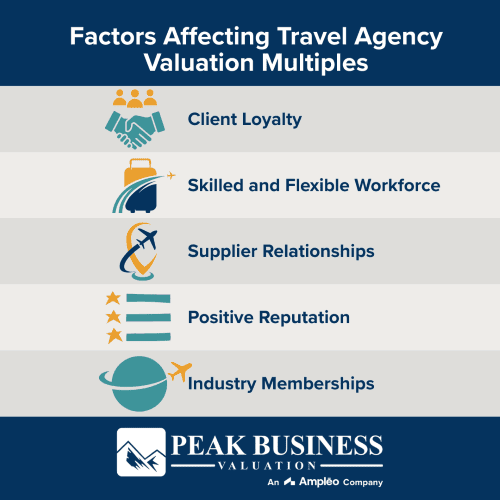
A variety of factors can influence whether a travel agency receives higher or lower valuation multiples. Understanding these value drivers helps business owners strengthen performance and enhance their agency’s market value. Below are several key elements that impact travel agency valuation multiples:
- Client Loyalty: Agencies with a loyal customer base benefit from steady, predictable revenue. This reduces risk, translating to stronger buyer confidence and higher market multiples.
- Skilled and Flexible Workforce: Maintaining a team with diverse skills and high product knowledge enhances service quality and customer satisfaction. Skilled employees contribute to stability and growth potential, which can significantly raise an agency’s value.
- Supplier Relationships: Establishing strong partnerships with airlines, hotels, and tour operators can help travel agencies secure competitive pricing and exclusive packages. This can boost demand, profitability, and fair market value.
- Positive Reputation: Establishing a strong reputation for reliability, responsiveness, and cost-effective travel solutions attracts repeat clients and referrals. This trait improves buyer confidence and supports favorable valuation multiples.
- Industry Memberships: Joining organizations such as the American Society of Travel Advisors (ASTA) builds credibility, offers critical guidance, and expands networks. These memberships can strengthen supplier relationships and enhance a travel agency’s valuation.
For more insights on increasing the value of a travel agency, check out Value Drivers for a Travel Agency.
Conclusion
Valuation multiples are a good starting point when you need a broad understanding of a travel agency’s fair market value. These figures offer general estimates based on recent market data and comparable transactions. However, relying on multiples for key decisions is risky since they do not provide a tailored valuation. If you need a defensible travel agency valuation, it is important to work with a professional business appraiser.
At Peak Business Valuation, we frequently assist entrepreneurs and financial professionals in the travel agency industry. Whether you are planning to buy, grow, sell, or finance a travel agency, we can provide a professional business valuation! We can also discuss any questions you may have about the valuation process. Schedule your free consultation with Peak Business Valuation to get started!
Read Valuing a Travel Agency and Travel Agency Valuations for more insights.