As the backbone of the food supply chain, food distribution companies ensure that grocery stores, restaurants, and individuals have the products they need every day. Due to the demand and reliability of food distribution businesses, selling a company in this industry can yield healthy returns. If you are interested in selling your food distribution business, it is important to obtain a valuation for selling a food distribution business.
Peak Business Valuation, business appraiser, values food distribution businesses throughout the United States. We are happy to provide you with a food distribution business valuation for selling your business. Additionally, Peak Business Valuation can discuss any questions you may have on selling or valuing a food distribution business. Start today by scheduling your free consultation below!
The Purpose of a Food Distribution Business Valuation
A business valuation is the process of determining the economic worth of a company. When selling a food distribution business, a valuation helps the owner understand what a buyer would pay in today’s market. This process involves assessing financial performance, industry conditions, and the company’s assets to arrive at a fair estimate.
By receiving a valuation for selling a food distribution business, you also gain insight into your company’s strengths and weaknesses. This knowledge allows you to better prepare for negotiations, make improvements before listing, and confidently plan your exit strategy. To read more, see How to Value a Food Distributor.
In this article, we discuss the importance of a business valuation for selling a food distribution business. If you have any questions, schedule a free consultation with Peak Business Valuation today!
Understanding the Fair Market Value of a Food Distribution Business
When valuing a food distribution business, appraisers use three valuation approaches to determine fair market value: the market, income, and asset approaches. Each approach is ideal for specific scenarios and goals. We detail each technique below:
- The Market Approach: This valuation approach analyzes the fair market value of food distribution businesses that have recently sold. By analyzing transaction data, valuation multiples, and industry benchmarks, you can learn what buyers are willing to pay. To learn more about market multiples, read Valuation Multiples for a Food Distributor.
- The Income Approach: The income approach focuses on a company’s earning potential. Business appraisers predict a business’s earning potential based on historical performance and industry trends. Then, those projections are adjusted using either a discounted cash flow (DCF) analysis or capitalization of earnings method.
- The Asset Approach: When using the asset approach, business appraisers identify a company’s net asset value by assessing tangible assets, intangible assets, and liabilities. Tangible assets may include items like inventory, delivery trucks, and office technology. Intangible assets often include trademarks, contracts, or licenses.
Each valuation approach provides unique insights into a food distribution company’s worth. Understanding these approaches gives business owners a clearer picture of fair market value and equips them to defend their asking price with confidence. With this information, sellers can also engage in negotiations from a position of confidence for a more successful sale.
Maximizing the Value of a Food Distribution Business
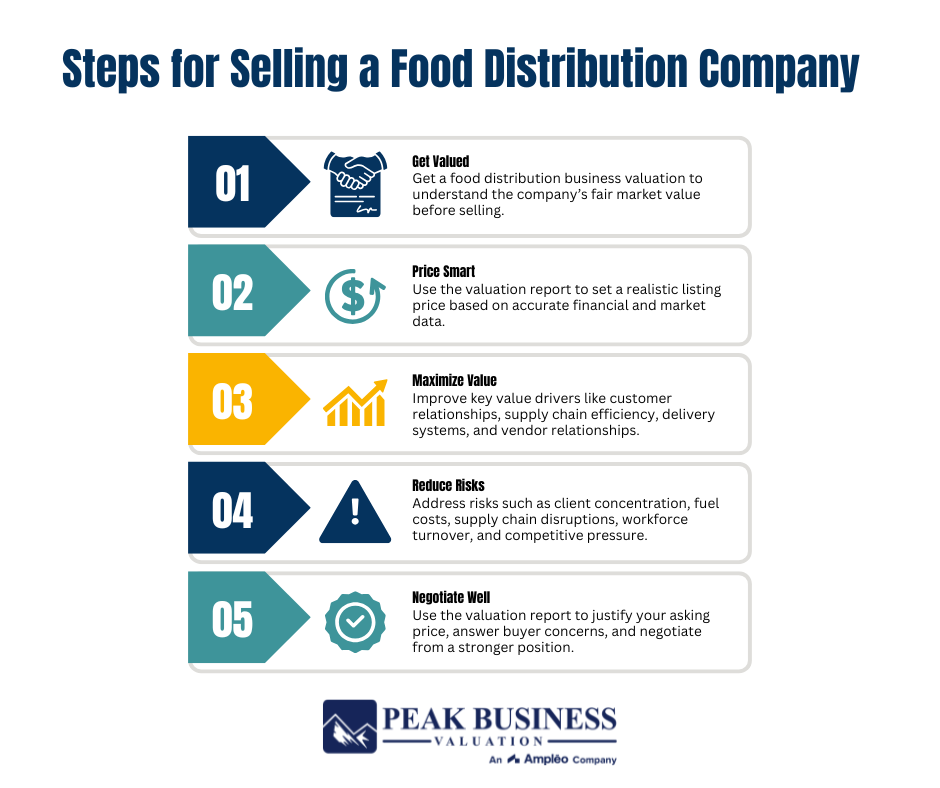
Before selling, business owners often aim to increase the value of their company. A valuation report highlights factors that have a major influence on value, known as value drivers. Some common examples include:
- Strengthening customer relationships
- Improving supply chain efficiency
- Updating delivery systems.
In the food distribution industry, buyers look for stability and scalability. This may mean diversifying your customer base, investing in warehouse technology, or demonstrating efficient delivery logistics. Showing consistent revenue growth, maintaining strong vendor relationships, and minimizing operational costs can also add to the appeal. By addressing these value drivers, owners can make their business more appealing to buyers. For more information, see Value Drivers for a Food Distributor.
Identifying Risks When Selling a Food Distribution Business
As part of a valuation for selling a food distribution business, experts also conduct a detailed risk analysis. This process evaluates both internal and external factors that could influence the company’s value and attractiveness to buyers. Understanding these risks allows business owners to prepare for potential challenges and demonstrate to buyers that they are actively managing them.
Some of the most common risks in the food distribution industry include:
- Client Concentration: Heavy reliance on a small number of major customers can make revenue streams vulnerable if one client leaves.
- Transportation and Fuel Costs: Rising fuel prices or logistics expenses directly affect profitability and delivery efficiency.
- Supply Chain Reliability: Vendor disruptions, product shortages, or delays can impact service levels and customer satisfaction.
- Workforce Stability: High turnover among truck drivers, warehouse staff, or management can disrupt operations and increase hiring and training costs.
- Competitive pressures: Larger distributors with more resources, or new market entrants offering lower prices or innovative solutions, can erode market share.
Additional risks may include compliance with food safety regulations, evolving consumer preferences, and broader economic shifts that affect demand. By identifying risks early, business owners can implement strategies to reduce uncertainty. Business owners can also enhance the company’s overall market value when aware of company risks.
Determining a Realistic Listing Price for a Food Distribution Business
When selling, food distribution business owners must decide on a listing or asking price. Setting this price too high can deter buyers, while pricing too low may reduce your return. Obtaining a business valuation for selling a food distribution business helps determine a fair listing price based on accurate financial and market data. This transparency builds trust between the buyer and seller, supporting smoother negotiations. For more details, see our article, Deciding on a Listing Price for Your Business.
Peak Business Valuation is here to guide you through this process and provide clarity about what your business is truly worth. Obtaining a business valuation for selling a food distribution business is fundamental. Speak with a trusted appraiser today and schedule a free consultation.
Utilizing a Valuation Report When Selling a Food Distribution Business
After analyzing your business, valuation experts compile their findings into a comprehensive business valuation report. This report includes financial analysis, market and industry benchmarks, and a risk assessment. It also provides key value drivers and recommended improvements tailored to your company. Sellers can use the report to justify their asking price, address buyer concerns, and plan strategically. A valuation report can also serve as a roadmap for negotiations and highlight opportunities to strengthen the business to increase the final sale price.
Preparing to Receive a Food Distribution Business Valuation
When preparing for a valuation, sellers should gather essential documents. These documents can include historical financial statements, tax returns, inventory and equipment lists, customer contracts, and supplier agreements. It is also helpful to provide business plans, growth strategies, and operational details. Together, these materials give the business appraiser a clear understanding of both the financial and operational aspects of the business.
Providing accurate and complete information ensures the appraiser can deliver reliable results. When seeking a valuation for selling a food distribution business, it is important to work with a qualified business appraiser. Reach out to Peak Business Valuation to start the valuation process.
Conclusion
If you are preparing to sell a food distribution business, a business valuation is an essential step. As part of a valuation for selling a food distribution business, you learn your company’s fair market value, identify risks, and discover opportunities to increase value before listing. This information empowers you to make confident decisions and maximize your return.
Peak Business Valuation specializes in valuing food distribution businesses nationwide. We are dedicated to helping you prepare for a successful sale. Start the process today by scheduling your free consultation with Peak Business Valuation.