With increased disposable income, Americans are spending more money. Hence, the clothing industry is growing particularly for online clothing stores and boutiques. For brick-and-mortar stores, while the industry is growing, in-person shopping is declining. This can be challenging for clothing stores. But, below we discuss some tips to create the most valuable clothing store. Whether you are looking to expand a clothing store, buy or sell a clothing store it is important to know what drives the value of a clothing store. Knowing these value drivers can help you be more prepared and increase the value of your clothing store. Below we discuss some of the value drivers for a clothing store. A valuation expert will assess each of these factors when valuing a clothing boutique. For questions, schedule your free consultation!
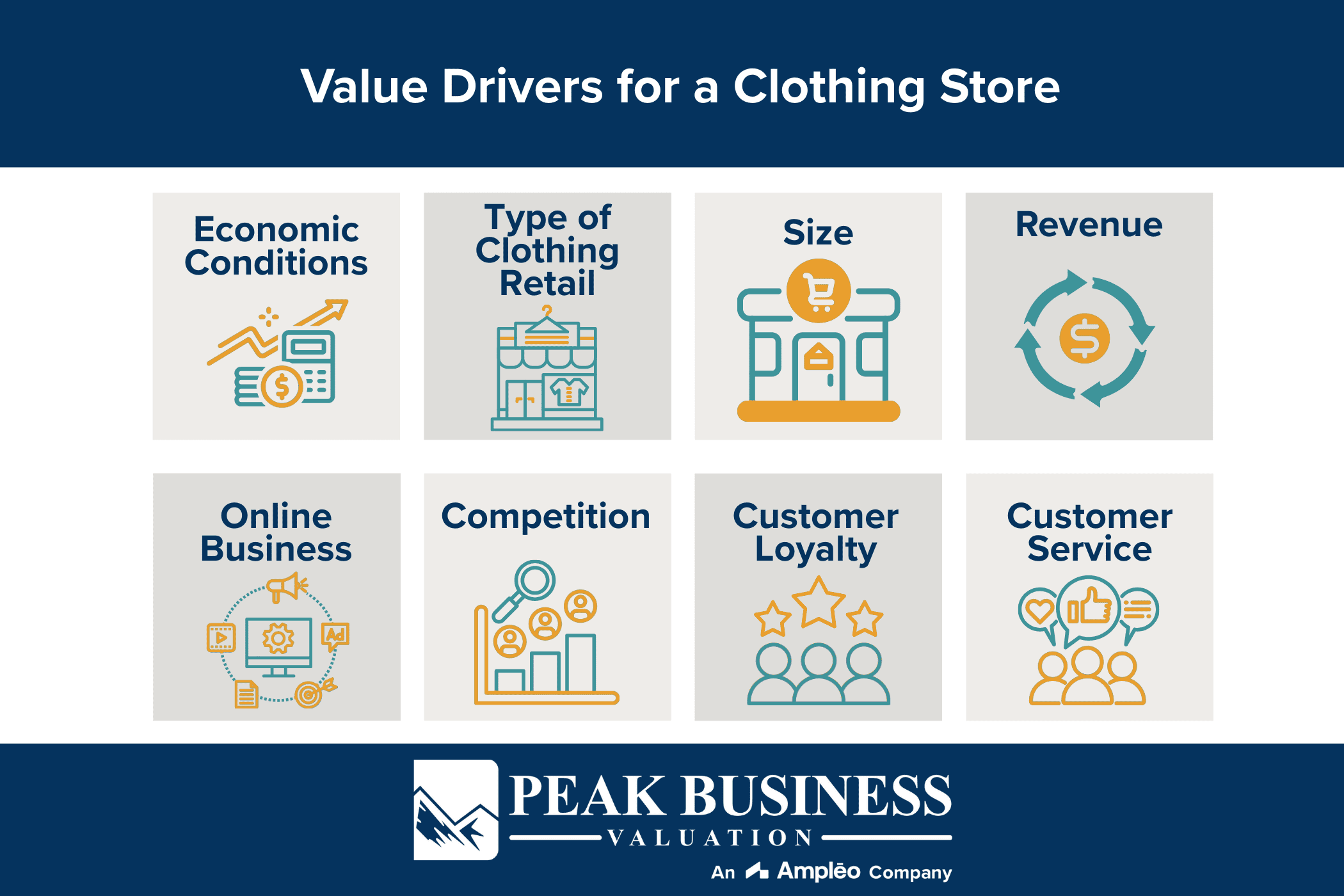
Key Value Drivers for a Clothing Store
When valuing a clothing store, a valuation expert like Peak Business Valuation, will analyze each of these value drivers.
Economic Conditions
One of the largest factors impacting the value of a clothing store is the overall economic condition. Pandemic conditions negatively impacted the clothing industry. As such, businesses in this industry will see a decline in the value of a clothing store. Throughout this article, we mention several ways in which the economic condition impacts the clothing industry. The better the economy is doing; the more likely consumers are to spend more money in this industry.
Type of Clothing Retail
The retail clothing industry is also highly concentrated. The 50 largest companies bring in nearly 65% of the total industry revenue. However, there are thousands of small clothing stores Peak Business Valuation, business appraiser Utah, gets to work with. These small retail clothing stores can bring in significant revenue for the business owner. This revenue is what drives the demand for store transactions.
Most companies in this industry seek to find a niche market of customers. This can include infant clothing, women’s clothing, maternity, men’s clothing, etc. By choosing a specific market, you create differentiation. Differentiating your store from the direct competition can help increase demand from customers.
Size
The size of a retail clothing store can range anywhere from a small independently owned boutique to large department stores. The value of a clothing store can be significantly impacted by the size of the clothing store. Small clothing stores are frequent targets for acquisition. As such, Peak Business Valuation, business appraiser Utah, values small clothing stores regularly. While size will impact the value, there are several other aspects a valuation expert considers. Schedule a free consultation for additional ideas.
Trend of Revenue
What direction is your clothing store’s revenue trending? Particularly for brick-and-mortar clothing stores, revenue growth is decreasing as competition increases by large department stores and online retailers. Businesses with premium valuations show revenue is stable or trending upward. It is best to sell your clothing store when revenue is increasing.
Online-based Businesses
Online shopping is seeing exponential growth. In this competitive market, online shopping is a must for clothing stores. In the recent pandemic, clothing stores operating through brick-and-mortar were severely hurt by states imposing shutdowns. This resulted in consumers turning to more online shopping to meet their clothing needs. Investing in a highly intuitive website and mobile applications can increase exposure to consumers. It can also create more ease of access for consumers to shop. If you own a clothing store online, be sure to check out Valuing an eCommerce Business.
Competition
The clothing industry is highly competitive. A valuation expert will conduct market research to determine how many other retail clothing stores are your direct competitors. They will assess the level of competition and how competitive your clothing store is in that market. Differentiating yourself from your competitors is key to creating customer loyalty. Keeping up to date with trends and customer demand is critical. Small clothing stores may have a more difficult time doing this as the market is dominated by large players. These large players often set the trends.
Customer Loyalty
One of the most valuable intangible assets a clothing store creates is customer loyalty. Building customer loyalty increases revenue and makes your company more valuable. There are several ways to increase customer loyalty. From creating rewards programs to coupons and sales. Finding the right balance can be tricky. You do not want to cut into profit margins unless it can increase demand and in turn increase revenue. For more ideas see The Value of Customer Loyalty.
Customer Service
Lastly, customer loyalty is linked to customer service. Quality customer service is key to retaining customers and attracting new customers. Tips to create happily satisfied customers include having a good exchange and return policy, providing timely customer service, and a quality team that has an eye for recommendations. Be sure to answer customer questions in a timely manner – most expect an answer within 24 hours. Investing in training and hiring quality employees can help give your customers the best experience possible. The better your customer service the more likely customers will return and share their experience with others.
Summary
Understanding what drives the value of a clothing store will help you set goals to maximize the value. If you are looking to buy or sell a clothing store, you will want to know how a valuation expert values your business. A business valuation will help you determine a fair market value. It can also help identify points to negotiate on within the business. Valuing a clothing store can be complex. As such, a business valuation professional uses their experience, judgment, and relevant information to determine a range of value.
Peak Business Valuation, business appraiser Utah, works with dozens of clothing stores. We have the experience to answer any questions you have about valuing a clothing store. Get started today by scheduling a free consultation!
Be sure to also check out Valuing a Clothing Store, How to Value a Clothing Store, as well as Valuation Multiples for a Clothing Store.